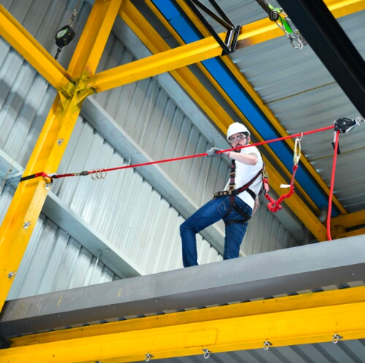
Working at height presents unique challenges for businesses, contractors, building owners, and industrial facilities across the Philippines. Tall buildings, towers, bridges, industrial structures, and other elevated environments often require specialized methods to provide workers with safe and controlled access. A rope access solution Philippines service can provide a practical approach for reaching areas that may be difficult to access using conventional equipment. Professional rope access combines specialized equipment, trained technicians, careful planning, and established safety procedures. Unlike ordinary rope climbing, professional rope access is a structured work-at-height system designed around controlled movement and multiple layers of protection. It can support inspection, maintenance, cleaning, repair, installation, and other specialized activities. Understanding how these solutions work can help organizations determine whether rope access is appropriate for their specific project.
Understanding Rope Access Solutions in the Philippines
A rope access solution is a specialized method of providing workers with controlled access to elevated, vertical, or difficult-to-reach work areas. It typically uses ropes, full-body harnesses, connectors, ascenders, descenders, backup devices, anchors, and other appropriate equipment. Workers use these systems to move into position while maintaining controlled support and protection throughout the task. Professional rope access should only be performed by appropriately trained and competent personnel who understand equipment use, work procedures, hazard controls, and emergency response. This approach differs significantly from using an ordinary rope for climbing because professional systems are designed around planned access, redundancy, inspection, and rescue considerations. In the Philippines, rope access can be particularly useful for structures where conventional access equipment may be difficult to position or operate. The right system depends on the structure, work scope, site conditions, equipment requirements, and risk profile of the project.
Why Rope Access Solutions Are Important for Philippine Worksites
Many Philippine worksites involve structures with challenging elevations, restricted ground areas, complex surfaces, or difficult access points. High-rise buildings, industrial plants, communication towers, bridges, and large infrastructure can require workers to reach areas that are not easily accessible from the ground. Conventional access methods such as scaffolding or aerial work platforms can be effective in many situations, but they may not always be practical for every location. Limited space, uneven surfaces, obstacles, building configuration, or restricted access can affect how conventional equipment is deployed. A properly planned rope access system can allow trained technicians to reach specific work locations while minimizing the need for extensive ground-level structures. This can be especially useful when the work involves targeted inspection, repair, maintenance, or other tasks at difficult elevations. However, rope access should always be selected through proper site assessment rather than simply assuming that it is the best option.
Common Applications of Rope Access Solutions in the Philippines
Rope access can support a wide range of inspection, maintenance, construction, and industrial activities. In high-rise buildings, trained technicians may use controlled access systems for facade inspections, exterior maintenance, sealant work, painting, cleaning, and repair activities. Industrial facilities may require rope access for structural inspections, equipment checks, tank-related work, plant maintenance, and access to elevated components. Infrastructure projects can also involve bridges, towers, elevated structures, and other locations where ground-based access is challenging. Rope access may also support inspection teams by allowing qualified personnel to reach areas where photographs, visual assessments, measurements, or other technical activities are required. Depending on the project, technicians may carry specialized tools and equipment while maintaining appropriate work positioning and protection. Because every structure presents different hazards, the exact work scope and access system should be established before operations begin.
Key Components of a Professional Rope Access System
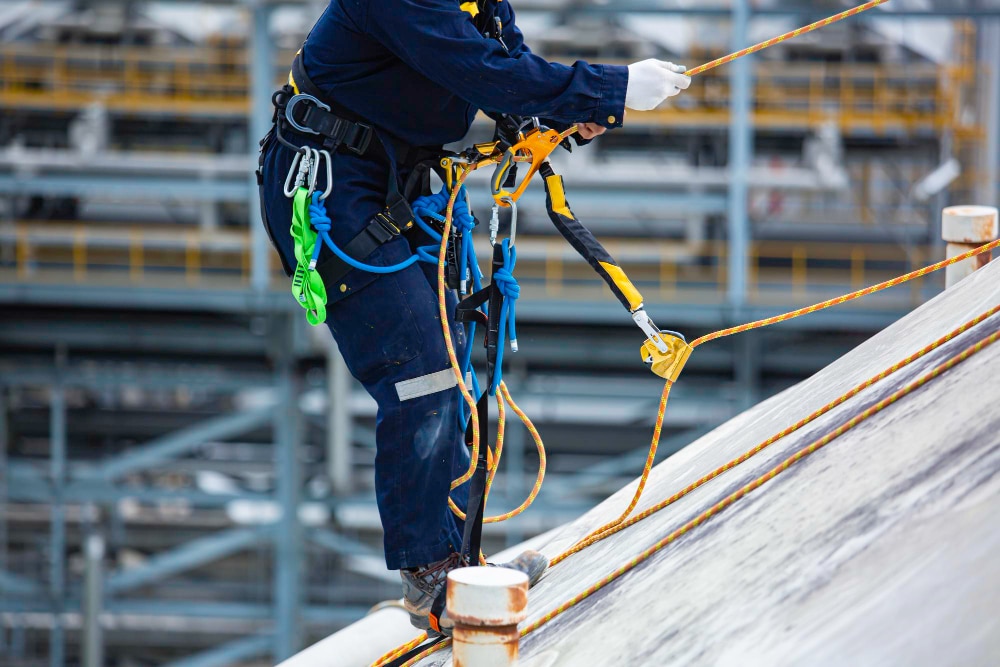
A professional rope access system consists of several interconnected components that work together to provide controlled access and protection. A full-body harness provides a secure connection between the worker and the rope system while supporting appropriate positioning during work. Working ropes allow technicians to ascend, descend, or remain positioned at specific locations, while an independent backup system can provide additional protection. Ascenders and descenders help control vertical movement and allow technicians to navigate the work area in a deliberate manner. Connectors such as appropriate carabiners and other attachment devices are used to connect compatible components within the system. Anchor systems are also critical because the reliability of the entire setup depends heavily on suitable and properly assessed attachment points. Equipment should be selected for the intended task, inspected appropriately, maintained properly, and used by personnel who understand the equipment and its limitations.
How a Rope Access Solution Philippines Project Is Planned
Successful rope access work begins with detailed planning before technicians enter the elevated work area. The project team should assess the structure, identify the intended work locations, and determine how technicians will safely reach those areas. Hazards should be identified and evaluated, including falling objects, structural conditions, electrical risks, moving equipment, environmental exposure, and potential interference from other site activities. Anchor locations and access routes should also be assessed to determine whether the proposed system is appropriate for the structure and task. Weather conditions deserve particular attention in the Philippines because heavy rain, strong winds, heat, and changing conditions can affect elevated work. Ground-level exclusion zones may also be needed to help protect people from falling tools, materials, or other objects. A suitable rescue plan should be established before work starts so the team knows how to respond if a worker becomes unable to continue independently.
Rope Access Safety Practices Every Project Should Prioritize
Safety should remain the central consideration in every professional rope access operation. Workers should be properly trained and competent for the type of rope access activities they are expected to perform. Equipment should be inspected before use, and damaged, unsuitable, or questionable equipment should not be placed into service. Working and backup systems should be appropriately configured, with compatible equipment used according to manufacturer requirements and established procedures. The work area should also be controlled to reduce the risk of unauthorized people entering areas beneath elevated operations. Clear communication among technicians, supervisors, building personnel, and other workers can help prevent misunderstandings during the project. Environmental conditions should be monitored throughout the work, and operations should be stopped when conditions create unacceptable risks.
Rope Access vs. Traditional Access Methods
Rope access is one of several methods available for reaching elevated work areas, and it should not automatically be treated as a replacement for every other access system. Scaffolding can provide a stable working platform and may be suitable for projects that require continuous access across a large surface for an extended period. Aerial work platforms can also provide efficient access when the site has adequate operating space and the equipment can safely reach the required location. Rope access can be advantageous when the worksite contains limited ground space, obstacles, complex surfaces, or locations that are difficult to reach using larger equipment. It may also reduce the amount of temporary access infrastructure needed for certain targeted tasks. The appropriate method depends on factors such as the work duration, structure, height, surface configuration, tools required, environmental conditions, and number of workers involved. A professional assessment should therefore compare available access methods rather than selecting one solely because it appears faster or less expensive.
Benefits of Choosing a Professional Rope Access Solution
One of the major benefits of professional rope access is the ability to provide controlled access to areas that may otherwise be challenging to reach. Technicians can work on vertical surfaces, elevated structures, and complex building sections without requiring extensive access structures in every situation. This can be useful for targeted maintenance activities where only specific areas of a building or structure need attention. Rope access can also provide flexibility because technicians can reposition themselves as work requirements change. In suitable applications, reduced ground-level equipment can help minimize disruption to pedestrians, vehicles, building occupants, or ongoing operations. Rope access may also support inspection and maintenance programs by making difficult locations more accessible to trained personnel. These benefits depend on proper planning, competent technicians, appropriate equipment, suitable site conditions, and a work scope that is compatible with rope access.
How to Choose a Rope Access Solution Provider in the Philippines
Selecting the right service provider is an important part of planning any rope access project. Businesses should first determine whether the provider has appropriately trained and competent technicians for the specific type of work required. It is also useful to ask about the provider’s safety procedures, including site assessment, risk management, equipment inspection, work supervision, communication, and emergency planning. Equipment should be appropriate for the work and maintained according to applicable requirements and manufacturer guidance. Experience with similar buildings, industrial environments, infrastructure, or specialized tasks can also be valuable when evaluating potential providers. A professional provider should be able to explain how the work will be performed rather than simply providing a price without discussing site conditions. Organizations should also request a clear scope of work so responsibilities, access requirements, safety controls, deliverables, and project expectations are properly understood.
Questions to Ask Before Hiring a Rope Access Service
Before hiring a rope access contractor, businesses should ask questions that help establish the provider’s competence and approach to safety. One important question is what types of rope access services the company regularly performs and whether its technicians have relevant training for the planned work. Organizations should also ask how the worksite will be assessed before technicians begin operations. It is useful to understand what type of anchor arrangement will be required and how the access system will be established. Clients should ask how equipment is inspected and maintained and what procedures are followed when equipment is found to be unsuitable. Rescue arrangements should also be discussed because emergency planning is an essential part of work-at-height operations. Asking these questions before hiring a provider can help companies compare services based on quality, preparation, competency, and safety rather than price alone.
What to Expect During a Professional Rope Access Project
A professional rope access project normally begins with a review of the site and the client’s required work scope. The service provider can then assess access requirements, potential hazards, anchor locations, environmental conditions, and other factors that may affect the operation. After planning, technicians prepare and inspect the equipment needed for the specific task. Appropriate work zones and exclusion areas can then be established to control risks to people below or around the worksite. The rope access system is installed and checked before technicians begin ascending or descending to the work location. During the operation, workers perform the agreed inspection, maintenance, repair, installation, cleaning, or other task while following established procedures. Once the work is completed, equipment is removed, the area is checked, and appropriate documentation or reporting can be provided to the client.
Common Mistakes to Avoid When Selecting Rope Access Services
Choosing a rope access provider based solely on the lowest price can create problems when important safety and quality factors are overlooked. Another common mistake is failing to verify whether technicians have appropriate training and experience for the specific work environment. Clients may also overlook the importance of anchor assessment and assume that any convenient attachment point can be used. Failing to ask about rescue procedures can leave an important part of emergency planning unclear. Poorly maintained or incompatible equipment can also introduce unnecessary hazards into an otherwise well-planned operation. Weather and environmental conditions should not be ignored, particularly when work is being performed on exposed structures. Taking time to evaluate the provider, work plan, equipment, personnel, and site controls can help organizations make a more informed decision.
When Is a Rope Access Solution the Right Choice?
Rope access may be appropriate when a project involves elevated or difficult-to-reach locations that can be safely accessed using a professionally designed rope system. The height of the structure is one factor, but it is not the only consideration when determining suitability. The configuration of the building or structure, available ground space, location of access points, duration of the work, and required tools can all influence the decision. Environmental conditions such as wind, rain, heat, and exposure should also be considered before work begins. The number of technicians required and the complexity of the task can affect the overall access strategy. Organizations should also compare rope access with alternatives such as scaffolding, aerial work platforms, or other engineered access systems. A qualified professional should evaluate the specific worksite before determining whether rope access is an appropriate solution.
FAQ About Rope Access Solution Philippines
What is a rope access solution?
A rope access solution is a specialized method of reaching elevated or difficult-to-access work areas using ropes, harnesses, mechanical devices, anchors, connectors, and related safety equipment. It allows trained technicians to move vertically and position themselves at specific work locations. Professional rope access is based on planned procedures and appropriate safety controls. It is different from recreational rope climbing or basic rope use. The equipment and system must be suitable for the intended task and environment. Proper training and competency are essential for workers performing rope access activities. The overall approach should be determined through a site-specific assessment.
Is rope access suitable for high-rise buildings in the Philippines?
Rope access can be suitable for certain high-rise building maintenance, inspection, repair, and cleaning activities. Its suitability depends on the building design, access points, anchor arrangements, work scope, environmental conditions, and other site-specific factors. High-rise structures can present difficult access challenges that may make specialized methods useful. However, height alone does not automatically mean rope access is the correct option. A professional assessment should determine whether the system can be safely and effectively implemented. Appropriate technicians, equipment, planning, and rescue procedures are also necessary. Building management should ensure that all relevant site requirements are addressed before work starts.
What industries use rope access solutions?
Rope access can be used in several industries where workers need to reach elevated or restricted areas. Building maintenance is one common application, particularly for high-rise exterior work and inspections. Industrial facilities may use rope access for inspections, maintenance, and access to elevated equipment or structures. Infrastructure projects involving bridges, towers, and other large structures can also require specialized access methods. Construction projects may use rope access for selected installation, inspection, repair, or maintenance tasks. The method can also support specialized inspection activities where direct access from the ground is difficult. The suitability of rope access depends on the specific work requirements and site conditions.
Is rope access safe?
Professional rope access can be a controlled work-at-height method when it is properly planned and performed by competent personnel. Safety depends on several factors, including appropriate equipment, reliable anchor arrangements, training, inspection, supervision, communication, and emergency planning. Workers should understand the equipment they use and the procedures required for the specific task. Work areas should also be managed to protect people who may be below or near the operation. Environmental conditions need to be monitored because weather can affect elevated work. A rescue plan should be established before operations begin. Organizations should therefore evaluate the complete rope access system rather than judging safety based on equipment alone.
What equipment is commonly used for rope access?
Common rope access equipment includes full-body harnesses, working ropes, backup ropes or systems, ascenders, descenders, connectors, anchor equipment, helmets, and task-specific tools. Each component has a specific function within the overall access system. Equipment must be compatible with the rest of the system and appropriate for the intended task. Inspection and maintenance are also important because equipment condition can affect safe operation. Technicians should be trained in the correct use, limitations, inspection, and handling of their equipment. The exact equipment selection varies depending on the worksite and job requirements. A professional provider should determine the appropriate equipment based on a proper assessment.
How do I choose a rope access provider in the Philippines?
Start by checking whether the provider has competent and appropriately trained technicians for the planned work. Ask about previous experience with similar structures or industrial environments. Review the company’s approach to site assessment, risk management, equipment inspection, work supervision, and emergency response. Ask how anchor arrangements will be assessed and how the work area will be controlled. A detailed proposal should explain the scope of work and the access method being recommended. It is also helpful to compare providers based on preparation, safety practices, technical capability, and service quality rather than cost alone. Selecting a provider that can clearly explain its approach can help establish greater confidence before work begins.
Can rope access replace scaffolding?
Rope access can serve as an alternative to scaffolding for certain projects, but it cannot replace scaffolding in every situation. Scaffolding may be preferable when workers require a large, continuous working platform or extended access across a broad surface. Rope access can be useful for targeted tasks where workers need to reach specific elevated locations. The best option depends on the building, work scope, duration, tools, materials, ground conditions, and safety requirements. A proper comparison should consider both the advantages and limitations of each access method. Project managers should avoid choosing an access system without first evaluating the actual worksite. Professional advice can help determine which method is appropriate for the planned activity.
What types of work can rope access technicians perform?
Rope access technicians may perform various specialized tasks depending on their training, competency, equipment, and the project requirements. These can include building facade inspections, maintenance, cleaning, painting, repairs, installation support, and structural inspection activities. Industrial environments may involve equipment inspection, structural checks, tank-related work, or maintenance tasks. Infrastructure projects can involve bridges, towers, and elevated structures. Technicians may also support technical inspection teams by providing access to difficult locations. The exact scope should always be defined before work begins. Any specialized activity should be performed only by personnel who are appropriately qualified and competent for that task.
Takeaway: Making the Most of Rope Access Solutions in the Philippines
A professional rope access solution Philippines service can provide controlled access for buildings, industrial facilities, infrastructure, and other structures where elevated work presents access challenges. Its effectiveness depends on much more than ropes and harnesses because proper planning, competent personnel, equipment selection, site assessment, and emergency procedures are all essential. Organizations should carefully evaluate the structure and work requirements before deciding whether rope access is the most suitable access method. Comparing rope access with scaffolding, aerial work platforms, and other alternatives can help project managers select an appropriate approach. Choosing an experienced and safety-focused provider can also help ensure that the work is properly planned from the beginning. Property owners, contractors, facility managers, and engineering teams should ask detailed questions about training, equipment, access planning, risk controls, and rescue procedures before hiring a provider. With the right planning and professional execution, rope access can be a practical solution for reaching difficult work areas while supporting efficient inspection, maintenance, repair, and other specialized activities.