Construction projects rely heavily on the strength and performance of their foundations. Whether a project involves a residential development, commercial complex, bridge, industrial facility, or transportation infrastructure, foundation piles must perform as designed to support structural loads safely and effectively. Even minor defects hidden beneath the ground can create serious structural concerns if left undetected.
A comprehensive Pile Integrity and Pile Dynamic Test program helps engineers, contractors, and project owners verify the condition and capacity of foundation piles before structures move forward to the next stages of construction. These testing methods provide valuable information about pile quality, continuity, and load-bearing performance while helping reduce project risks and unexpected costs.
As a DPWH-BRS accredited engineering and construction laboratory, Inch-On Materials Testing Laboratory provides professional Pile Integrity and Pile Dynamic Test services using recognized ASTM and AASHTO testing standards to support quality assurance and structural reliability.
Understanding Foundation Piles and Their Role in Structural Stability
Foundation piles are deep foundation elements designed to transfer structural loads from buildings and infrastructure into stronger soil layers or bedrock. They are commonly used when surface soils cannot adequately support the loads imposed by a structure.
Piles are frequently installed for high-rise buildings, bridges, ports, retaining structures, warehouses, industrial plants, and large-scale infrastructure developments. Their performance directly affects the safety, durability, and service life of the entire project.
Since piles remain hidden below ground after installation, visual inspection alone cannot confirm their condition. This makes a Pile Integrity and Pile Dynamic Test a critical part of foundation quality verification.
When pile defects go unnoticed, they can lead to settlement, structural instability, construction delays, and expensive remediation work. Proper testing helps identify concerns early and allows corrective measures to be implemented before significant issues develop.
What Is a Pile Integrity and Pile Dynamic Test?
A Pile Integrity and Pile Dynamic Test consists of specialized evaluation methods used to assess the condition and performance of foundation piles.
Pile integrity testing focuses on determining the structural continuity of the pile. It helps identify physical defects or irregularities that may affect performance.
Pile dynamic testing evaluates the load-bearing capacity and behavior of piles under impact loading conditions. It provides important information regarding pile resistance and structural performance.
Although both methods assess foundation piles, they serve different purposes and provide different types of engineering data. Together, they create a more complete understanding of pile quality and capacity.
Conducting both forms of Pile Integrity and Pile Dynamic Test helps engineers make informed decisions regarding foundation acceptance and project readiness.
How Pile Integrity Testing Works
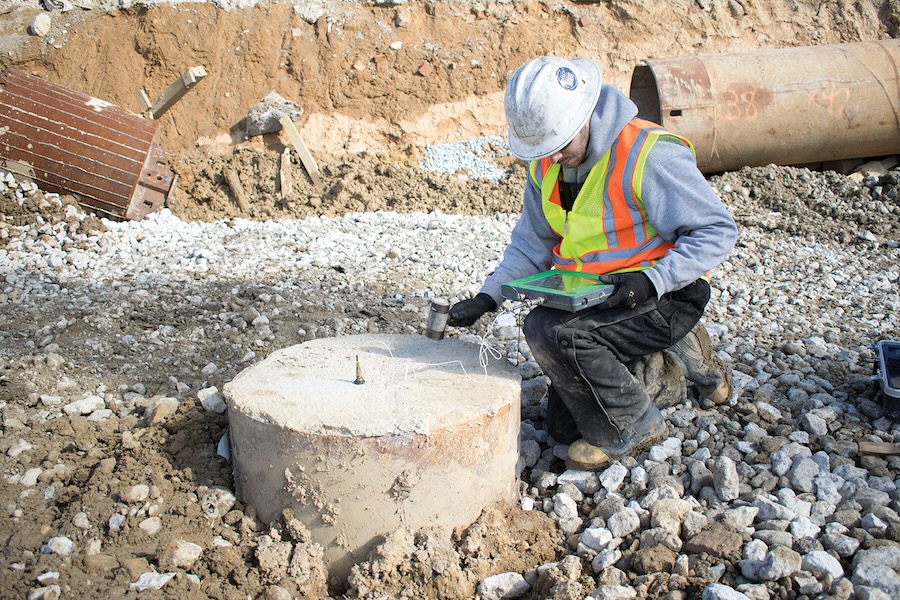
Pile integrity testing is considered a non-destructive testing method. The process involves applying a controlled impact to the top of a pile and recording the resulting wave reflections.
Specialized sensors capture the reflected signals generated by changes within the pile. Engineers analyze these signals to identify variations that may indicate defects or discontinuities.
The procedure is generally quick, efficient, and suitable for testing a large number of piles within a project site.
Defects That Can Be Detected
A Pile Integrity and Pile Dynamic Test program can identify several common foundation issues, including:
- Cracks within the pile shaft
- Necking or reductions in pile diameter
- Voids and honeycombing
- Material inconsistencies
- Poor concrete quality
- Segregation issues
- Construction defects
- Changes in pile geometry
Detecting these problems early helps project teams take corrective action before structural loads are applied.
Benefits of Pile Integrity Testing
Pile integrity testing offers numerous advantages for construction projects.
The method is non-destructive, allowing piles to remain fully functional after testing. Testing can be completed quickly, helping maintain construction schedules while providing valuable quality assurance information.
The process is also cost-effective compared to extensive excavation or replacement work resulting from unidentified defects. Most importantly, integrity testing helps confirm that foundation piles have been constructed according to project specifications.
How Pile Dynamic Testing Works
Pile dynamic testing evaluates pile performance during controlled impact events. Sensors are attached to the pile, and a hammer strike generates stress waves that travel through the foundation element.
The collected data is analyzed using advanced engineering software to estimate pile capacity, resistance distribution, and driving stresses.
A properly conducted Pile Integrity and Pile Dynamic Test provides valuable insights into actual pile behavior under loading conditions.
Information Obtained Through Dynamic Testing
Pile dynamic testing can provide information such as:
- Axial load capacity
- Shaft resistance
- End bearing resistance
- Driving stresses
- Hammer performance
- Pile response characteristics
- Load transfer behavior
These results help engineers determine whether foundation piles meet project design requirements.
Advantages of Pile Dynamic Testing
One of the primary benefits of dynamic testing is its ability to provide rapid results. Engineers can evaluate pile performance without waiting for lengthy testing procedures.
Pile dynamic testing often reduces project costs compared to traditional static load tests while still providing dependable information regarding pile capacity.
A comprehensive Pile Integrity and Pile Dynamic Test program supports informed decision-making throughout construction and foundation verification processes.
When Should a Pile Integrity and Pile Dynamic Test Be Conducted?
Timing plays an important role in achieving meaningful test results.
During New Construction Projects
New developments frequently require a Pile Integrity and Pile Dynamic Test as part of quality assurance programs. Testing verifies that foundation elements meet engineering specifications before structural work progresses.
During Infrastructure Development
Major infrastructure projects often require extensive pile testing due to the high structural demands involved.
Common applications include:
- Bridges
- High-rise buildings
- Airports
- Ports and marine structures
- Industrial facilities
- Transportation projects
Testing helps confirm that foundation systems can safely support design loads.
During Renovation and Expansion Projects
Existing structures undergoing expansion or modification may also require a Pile Integrity and Pile Dynamic Test to evaluate current foundation conditions and determine suitability for additional loads.
Common Construction Challenges Identified Through Pile Integrity and Pile Dynamic Test
Construction sites present many variables that can affect pile performance.
Installation Defects
Improper installation techniques can result in pile damage, structural discontinuities, or inadequate load transfer characteristics. Testing helps identify these concerns before project completion.
Soil Variability
Subsurface conditions often differ from preliminary investigations. Variations in soil properties can influence pile performance and load capacity.
A Pile Integrity and Pile Dynamic Test provides data that helps engineers understand how foundation elements interact with actual site conditions.
Material Quality Issues
Poor concrete placement, segregation, honeycombing, and inadequate curing may affect pile integrity. Testing provides valuable verification of construction quality.
Capacity Variations
Actual pile performance may differ from design assumptions due to site-specific conditions. Dynamic testing helps confirm whether installed piles meet required capacities.
Why Pile Testing Is Critical for Project Success
Foundation problems can become extremely expensive if discovered after construction progresses. Testing helps prevent these situations by identifying concerns early.
Enhancing Structural Safety
A properly executed Pile Integrity and Pile Dynamic Test program contributes to safer structures by verifying foundation performance before full loading occurs.
Supporting Regulatory Compliance
Many projects require foundation verification as part of regulatory and quality assurance requirements. Accredited testing provides confidence that project standards have been satisfied.
Reducing Future Costs
Identifying pile issues during construction is significantly less expensive than correcting foundation failures after project completion.
Testing reduces the likelihood of costly repairs, delays, litigation, and operational disruptions.
Strengthening Quality Control
Construction quality control programs benefit greatly from reliable testing data. Engineers and project managers gain objective information regarding foundation conditions and performance.
Why Choose Inch-On Materials Testing Laboratory for Pile Integrity and Pile Dynamic Test Services
Selecting the right testing partner is essential for obtaining reliable and accurate results.
DPWH-BRS Accredited Laboratory
Inch-On Materials Testing Laboratory is accredited by the Department of Public Works and Highways – Bureau of Research and Standards (DPWH-BRS). This accreditation demonstrates compliance with recognized testing requirements and professional standards.
ASTM and AASHTO Testing Standards
All Pile Integrity and Pile Dynamic Test services are conducted following established ASTM and AASHTO procedures. These standards help ensure consistency, accuracy, and reliability throughout the testing process.
Advanced Testing Equipment
Inch-On employs specialized equipment designed to perform accurate field evaluations of soil, concrete, and foundation piles.
Modern testing technology allows engineers to gather dependable data for informed decision-making.
Experienced Technical Team
The laboratory’s engineering and testing professionals possess the technical expertise needed to evaluate foundation systems and interpret complex testing results.
Their knowledge supports accurate reporting and practical recommendations for construction projects.
Comprehensive Field and Laboratory Services
Beyond Pile Integrity and Pile Dynamic Test services, Inch-On offers a complete range of construction material and geotechnical testing solutions. This integrated approach supports quality assurance throughout every stage of construction.
Best Practices for Successful Pile Integrity and Pile Dynamic Test Programs
Achieving meaningful results requires proper planning and execution.
Define Testing Objectives Early
Project teams should establish testing requirements during the planning phase to ensure adequate coverage and compliance with project specifications.
Select Representative Piles
Testing should include piles that accurately represent site conditions and construction practices.
Work With Qualified Testing Specialists
Experienced testing professionals help ensure accurate data collection, analysis, and reporting.
Review Results Thoroughly
Engineering teams should carefully evaluate test findings and compare results against project requirements.
Implement Corrective Measures Promptly
When testing identifies concerns, corrective actions should be taken immediately to prevent larger construction issues.
The Future of Foundation Testing in Modern Construction
Construction technology continues to advance, increasing the importance of accurate foundation verification.
Digital data acquisition systems, advanced signal processing, and improved analytical software are helping engineers obtain more precise information regarding foundation performance.
As project complexity grows, the demand for reliable Pile Integrity and Pile Dynamic Test services will continue to increase. Construction owners, developers, and contractors recognize the value of foundation verification as a critical component of project success.
Professional testing supports safer structures, stronger quality control programs, and improved long-term performance.
Frequently Asked Questions (FAQ)
What is a Pile Integrity and Pile Dynamic Test?
A Pile Integrity and Pile Dynamic Test consists of specialized procedures used to evaluate the structural condition and load-bearing performance of foundation piles. Integrity testing identifies defects, while dynamic testing assesses pile capacity and behavior.
Why is a Pile Integrity and Pile Dynamic Test important?
These tests help verify foundation quality, identify hidden defects, confirm pile capacity, reduce construction risks, and support structural safety.
What defects can pile integrity testing detect?
Pile integrity testing can identify cracks, necking, voids, honeycombing, material inconsistencies, and other construction-related defects.
Does pile dynamic testing determine pile capacity?
Yes. Dynamic testing estimates pile load capacity, shaft resistance, end bearing resistance, and pile performance under loading conditions.
Is a Pile Integrity and Pile Dynamic Test destructive?
No. Both methods are generally considered non-destructive and do not damage properly constructed foundation piles.
Which projects commonly require a Pile Integrity and Pile Dynamic Test?
High-rise buildings, bridges, industrial facilities, marine structures, transportation projects, and large commercial developments commonly require these testing services.
Why should contractors choose an accredited testing laboratory?
Accredited laboratories such as Inch-On Materials Testing Laboratory provide reliable testing procedures, qualified technical personnel, recognized standards compliance, and dependable engineering data that support project success.