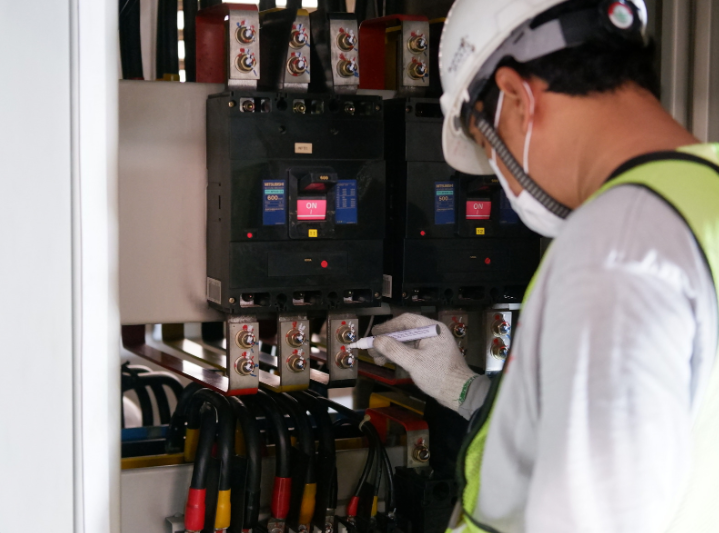
Steel Products Testing plays a critical role in construction safety by confirming whether reinforcing steel bars and other structural steel materials meet required performance standards. Every structure depends on steel as its internal support system, which carries loads, resists tension, and maintains stability under stress. Without reliable Steel Products Testing, structural integrity becomes uncertain and risks increase significantly during both construction and service life.
Steel Products Testing focuses on evaluating the mechanical behavior of steel materials used in construction projects. These evaluations confirm whether the steel can withstand tensile loads, maintain proper elongation, and perform according to design specifications. Construction professionals depend on these results to approve materials before they are installed in critical structural components.
The importance of Steel Products Testing continues to grow as modern buildings become taller, more complex, and exposed to environmental and seismic forces. Reliable testing ensures that only verified materials are used in structural systems, reducing risks and improving long-term performance.
Overview of Steel Products Testing in Construction
Steel Products Testing refers to a series of mechanical evaluations performed on reinforcing steel bars and structural steel components. These tests measure how steel reacts under controlled stress conditions, allowing engineers to determine whether the material meets required strength and flexibility standards.
Steel Products Testing commonly includes tensile strength evaluation, yield strength measurement, and elongation analysis. Each of these tests provides essential data that helps determine whether steel is suitable for construction use. Tensile strength indicates the maximum load a steel sample can withstand before breaking. Yield strength identifies the point at which steel begins to deform permanently. Elongation measures how much the steel can stretch before failure, which is essential for ductility and seismic resistance.
Steel Products Testing applies to a wide range of construction materials, including reinforcing bars used in concrete structures, structural beams, and fabricated steel components. Each material type requires accurate testing to ensure compliance with engineering specifications and safety standards.
ASTM A370 Standard in Steel Products Testing
Steel Products Testing follows internationally recognized standards to ensure consistency and reliability of results. One of the most widely used standards is ASTM A370, which defines procedures for mechanical testing of steel products.
ASTM A370 outlines how tensile testing, bending evaluation, and other mechanical assessments should be conducted. This standard ensures that Steel Products Testing produces consistent and comparable results across different laboratories and projects. Without standardized procedures, test results may vary, leading to uncertainty in material performance.
Steel Products Testing based on ASTM A370 provides engineers with confidence that the steel used in construction projects meets global safety and performance benchmarks. This standard plays a key role in verifying material quality before approval and installation on site.
Mechanical Methods Used in Steel Products Testing
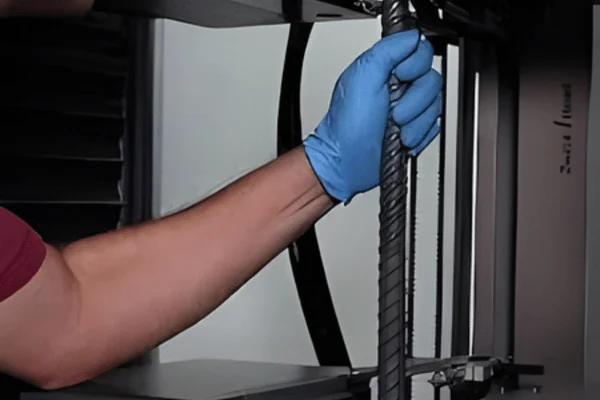
Steel Products Testing relies on specialized equipment and controlled procedures to evaluate material behavior under stress. One of the most important tools used in this process is the Universal Testing Machine, commonly known as UTM.
The UTM applies controlled tensile force to steel samples until failure occurs. During Steel Products Testing, this machine records important data such as load, deformation, and breaking point. These measurements help determine whether the steel meets required strength levels.
Tensile testing is a core component of Steel Products Testing. This test evaluates how much pulling force the steel can resist before breaking. Yield testing identifies the stress level at which permanent deformation begins. Elongation testing measures ductility, which is essential for structural flexibility and seismic resistance.
Steel Products Testing also includes careful analysis of test results. Engineers interpret the data to confirm whether the steel is suitable for structural applications. This step ensures that only compliant materials are approved for construction use.
Steel Grade Verification Through Steel Products Testing
Steel Products Testing plays a vital role in verifying steel grade compliance for construction projects. Steel is manufactured in different grades, such as Grade 40, Grade 60, and Grade 75, each designed for specific load-bearing requirements.
Verification through Steel Products Testing ensures that delivered materials match the specifications stated in mill certificates. This process confirms that the steel used on site performs as expected under structural loads. Without proper verification, there is a risk of using substandard materials that may compromise safety.
Steel Products Testing helps engineers identify discrepancies between certified data and actual material performance. This verification step supports quality control and prevents improper material usage in critical structural elements such as columns, beams, and foundations.
Accurate Steel Products Testing ensures that each steel batch complies with design requirements, reducing the risk of structural failure and improving overall project reliability.
Ductility and Elongation in Steel Products Testing for Seismic Safety
Steel Products Testing is especially important for evaluating ductility and elongation properties in construction materials. These characteristics determine how steel behaves under extreme stress conditions, such as earthquakes or high wind loads.
Ductility allows steel to deform without sudden failure, which is essential for absorbing energy during seismic activity. Elongation measurement during Steel Products Testing provides insight into how much deformation steel can undergo before breaking.
Structures built in seismic-prone regions require materials with high ductility to maintain stability during ground movement. Steel Products Testing ensures that reinforcing bars meet these safety requirements, reducing the likelihood of catastrophic failure.
Engineering teams rely on Steel Products Testing results to select materials that enhance structural resilience. This makes ductility assessment a critical component of modern construction safety planning.
Field and Laboratory Integration in Steel Products Testing
Steel Products Testing involves both field-based assessment and laboratory-based mechanical evaluation. Field testing focuses on on-site inspection and material sampling, while laboratory testing provides detailed mechanical analysis under controlled conditions.
Field evaluation during Steel Products Testing ensures that materials delivered to construction sites match approved specifications. Samples collected from the field are then subjected to laboratory analysis for precise measurement of mechanical properties.
Laboratory Steel Products Testing delivers highly accurate results using advanced equipment and standardized procedures. The combination of field and laboratory testing creates a complete quality assurance system for construction materials.
This integrated approach ensures that Steel Products Testing covers every stage of material verification, from delivery to final approval.
Importance of Accredited Laboratories in Steel Products Testing
Steel Products Testing must be conducted by accredited laboratories to ensure reliability and compliance with industry standards. Accredited facilities follow strict procedures and maintain calibrated equipment for accurate results.
Inch-On Materials Testing Laboratory operates as a DPWH-BRS accredited laboratory providing certified Steel Products Testing services for construction projects. Accreditation ensures that all testing procedures meet national and international standards, including ASTM and AASHTO.
Steel Products Testing conducted in accredited laboratories provides official documentation that engineers and contractors can rely on for compliance and project approval. These certified results are essential for regulatory requirements and quality assurance processes.
Accredited Steel Products Testing supports safe construction practices by ensuring that all materials meet established safety thresholds.
Services Supporting Steel Products Testing
Steel Products Testing is part of a broader range of construction material evaluation services that support project quality and safety.
Reinforcing steel bar testing evaluates tensile strength and ductility. Concrete testing ensures compressive strength compliance. Aggregate testing verifies material composition for concrete production. Cement testing confirms binding performance and quality consistency. Soil testing evaluates foundation stability and ground conditions.
Steel Products Testing works alongside these services to provide a complete structural material assessment system. Together, these tests ensure that every component of a construction project meets engineering requirements.
Why Steel Products Testing Matters in Construction Projects
Steel Products Testing plays a direct role in preventing structural failure and ensuring long-term durability of buildings and infrastructure. Without proper testing, construction projects face risks related to weak materials, incorrect specifications, and unpredictable performance under load.
Steel Products Testing supports engineering decisions by providing accurate data on material strength and behavior. This allows designers and contractors to select appropriate materials for different structural applications.
Reliable Steel Products Testing also helps maintain compliance with building codes and regulatory standards. This reduces project risks and ensures that structures meet required safety benchmarks.
Construction professionals depend on Steel Products Testing to ensure that every steel component contributes to a safe and stable structure.
Conclusion: Building Safety Through Steel Products Testing
Steel Products Testing remains a fundamental process in modern construction quality assurance. It ensures that reinforcing steel and structural materials meet required performance standards and can safely support designed loads.
Through standardized methods such as ASTM A370, Steel Products Testing provides accurate measurements of strength, ductility, and elongation. These results guide engineers in selecting safe and reliable materials for construction projects.
Organizations such as Inch-On Materials Testing Laboratory play a critical role in delivering certified Steel Products Testing services that support safe and compliant construction practices.
Steel Products Testing continues to be essential for building structures that withstand environmental forces, seismic activity, and long-term use.
Frequently Asked Questions About Steel Products Testing
What is Steel Products Testing?
Steel Products Testing refers to mechanical evaluation of reinforcing steel bars and structural steel materials to determine strength, ductility, and compliance with standards.
Why is Steel Products Testing important?
Steel Products Testing ensures that construction materials meet required safety and performance standards, reducing risks of structural failure.
What standard is used for Steel Products Testing?
ASTM A370 is commonly used for Steel Products Testing to ensure consistent and internationally accepted results.
What properties are measured during Steel Products Testing?
Steel Products Testing measures tensile strength, yield strength, and elongation to evaluate performance under stress.
Who performs Steel Products Testing?
Steel Products Testing is conducted by accredited laboratories equipped with Universal Testing Machines and certified procedures.
How does Steel Products Testing improve construction safety?
Steel Products Testing verifies material quality, ensuring only compliant steel is used in structural components, improving overall building safety.