Reliable construction depends on materials that can perform according to their intended purpose. Grout plays an important role across masonry and structural applications because it can fill spaces, support components, improve load transfer, and provide continuity between construction elements. A problem with grout quality, placement, curing, or strength can affect the performance of the completed work.
Grout integrity testing Philippines projects can provide valuable technical information about grout quality and help construction teams identify potential concerns before they become costly problems. Testing also gives engineers, contractors, developers, and quality-control teams documented results that can support construction decisions.
For masonry applications, ASTM C1019-26 covers field and laboratory sampling and compression testing of grout. ASTM C476 provides specifications covering fine and coarse grout used for masonry construction. The appropriate test method still depends on the grout application, project specification, and engineering requirements.
Inch-On Materials Testing Laboratory is a DPWH-BRS accredited engineering and construction laboratory established in November 2018. The laboratory provides field and laboratory testing for soil, concrete, construction materials, and foundation-related applications while following ASTM and AASHTO testing standards.
What Is Grout Integrity Testing?
Grout integrity testing refers to technical evaluation performed to determine whether grout meets specified quality and performance requirements. Depending on the project, testing may examine properties such as compressive strength, material consistency, density, filling quality, and other characteristics relevant to the intended application.
For masonry grout, ASTM C1019-26 provides procedures for field and laboratory sampling and compression testing. The standard also recognizes the importance of specimen conditions because grout placed within masonry units can experience absorption conditions that differ from ordinary laboratory specimens.
A proper grout integrity testing Philippines program should begin with the project requirements. Engineers and testing professionals need to identify the grout type, intended application, specified strength, sampling requirements, curing conditions, and applicable testing procedures.
Testing should not simply produce a number. The results should provide meaningful technical information that can be reviewed against the requirements established for the construction project.
Why Grout Integrity Testing Philippines Projects Need Quality Control
Grout may appear simple, yet its performance can affect important construction components. Poor mixing, excessive water, inadequate consolidation, improper placement, unsuitable materials, or insufficient curing can contribute to quality problems.
A structured grout integrity testing Philippines program helps project teams obtain objective data rather than relying solely on visual inspection.
Structural Safety
Grout may support structural components, fill masonry cells, surround reinforcement, or provide support beneath specific construction elements. Its required performance depends on its intended application.
Testing helps determine whether measured properties correspond with project requirements. When results identify a potential deficiency, engineers and project managers can evaluate the situation and determine the appropriate technical response.
Construction Quality Assurance
Quality assurance depends on consistent material control. Sampling and testing can provide a record of material performance across different construction stages.
For masonry grout, ASTM C1019 describes testing procedures that can support quality control and evaluation of grout preparation during construction.
This makes grout integrity testing Philippines a useful part of a broader construction quality program.
Compliance With Project Specifications
Every project may have specific requirements for grout composition, strength, placement, curing, and testing frequency. Testing should therefore be matched with approved plans, specifications, applicable standards, and engineering requirements.
A qualified laboratory can help project teams follow the specified testing procedure and document the resulting measurements.
Early Identification of Material Problems
Testing can identify potential issues before construction progresses too far. Early information may help reduce the possibility of extensive corrective work, delays, or material replacement.
This is particularly valuable for large construction projects where correcting a hidden material problem after completion can require significant time and resources.
Common Grout Problems That Testing Can Help Identify
Several conditions can affect grout performance. Some may be related to the material itself, while others can result from preparation, handling, placement, or curing.
Voids and Incomplete Filling
Grout intended to fill masonry cells, gaps, or structural spaces needs appropriate placement. Voids or incomplete filling can reduce the intended support and continuity of the system.
Visual inspection may not always reveal conditions hidden within a completed assembly. For this reason, project-specific investigation and testing may be considered when there is concern about placement quality.
Low Grout Strength
Grout strength can be affected by several factors, including:
- Incorrect proportions
- Excessive water
- Improper mixing
- Poor-quality ingredients
- Inadequate consolidation
- Unsuitable curing conditions
- Improper handling
For masonry grout, ASTM C476 addresses grout types and requirements related to proportions and strength. ASTM C1019 provides a method for sampling and compression testing of masonry grout.
Cracking and Shrinkage
Cracking may result from several causes. Material composition, curing conditions, drying, restraint, temperature changes, placement practices, and structural movement can all require consideration.
Testing alone may not explain every cause of cracking. Engineers may need to combine laboratory results, field observations, construction records, and design information when assessing a specific condition.
Segregation and Material Non-Uniformity
A grout mixture should be appropriately prepared and placed for its intended use. Segregation can affect material uniformity and may contribute to inconsistent performance.
Sampling and testing can provide useful information about material characteristics and consistency.
Poor Bonding
Grout performance may also depend on surrounding construction materials and surface conditions. Contamination, inadequate preparation, moisture conditions, improper placement, or unsuitable installation practices can affect bonding.
When bonding or placement is a concern, the selected investigation method should match the actual construction condition.
How Grout Integrity Testing Is Performed
The exact testing process depends on the grout application and project requirements. A typical quality-control workflow can include several stages.
Project and Material Review
The first step involves reviewing available project information. This may include:
- Construction drawings
- Material specifications
- Approved mix design
- Required compressive strength
- Applicable testing standards
- Sampling requirements
- Curing requirements
- Project quality-control procedures
This review helps determine which testing procedures are appropriate.
Sample Collection
Representative sampling is an important part of reliable testing. Samples should be properly identified, handled, and documented.
ASTM C1019-26 covers both field and laboratory sampling procedures for masonry grout and compression testing.
Proper sample identification also helps maintain traceability between the test result and the construction location or batch represented by that sample.
Laboratory Evaluation
Laboratory testing provides controlled conditions for evaluating material characteristics. Depending on the requested service, laboratory procedures may evaluate compressive strength and other specified properties.
For masonry grout, ASTM C1019 is specifically designed around sampling and compression testing.
A laboratory evaluation can provide quantitative information that project engineers can compare against specified requirements.
Field Evaluation
Field testing and site inspection can complement laboratory testing. Actual construction conditions may reveal information about placement, curing, workmanship, surrounding materials, and site conditions.
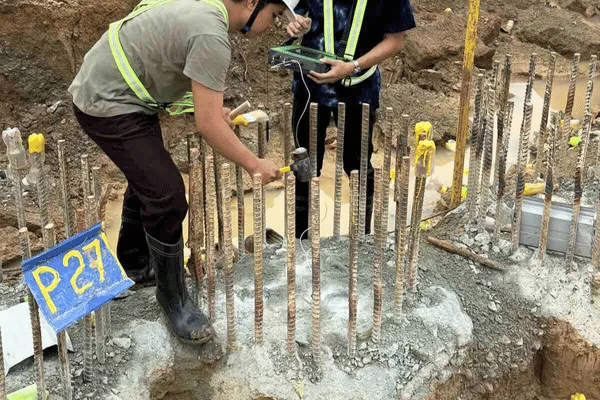
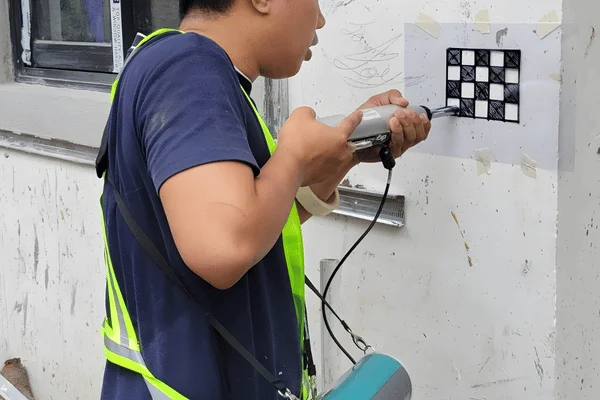
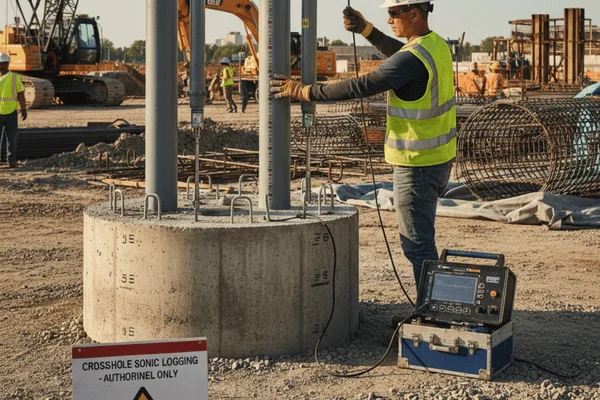
Inch-On Materials Testing Laboratory provides field testing services covering in-situ evaluation of soil, concrete, and pile foundations. Such field capabilities can complement laboratory-based construction material evaluation when a project requires broader technical assessment.
Results Documentation
A technical test report should clearly identify the sample, project, test method, testing date, measured results, and other relevant information.
Clear documentation gives engineers, contractors, inspectors, and project owners a useful record for quality-control purposes.
Standards Used for Construction Materials Testing
Standards help laboratories and construction teams follow consistent procedures. They also establish defined methods for sampling, testing, measurement, and reporting.
ASTM Standards
ASTM International publishes numerous standards related to construction materials.
For masonry grout, ASTM C1019-26 is the current standard test method covering field and laboratory sampling and compression testing. ASTM C476 covers specifications for masonry grout, including fine and coarse grout and related strength or proportion requirements.
The selected standard should always correspond with the material, application, and project requirements.
AASHTO Standards
AASHTO standards are also widely used for infrastructure and construction-material evaluation. Their applicability depends on the specific material and test requested.
Inch-On Materials Testing Laboratory follows ASTM and AASHTO testing standards as part of its laboratory and field-testing activities.
DPWH Requirements
Philippine construction projects may also involve requirements established by government agencies, project specifications, contract documents, and engineering standards.
Inch-On Materials Testing Laboratory is accredited by the Department of Public Works and Highways – Bureau of Research and Standards (DPWH-BRS), supporting its role as an engineering and construction testing laboratory.
Laboratory Testing and Field Testing: How They Work Together
Effective construction quality control may require both laboratory information and field observations.
Laboratory Testing
Laboratory testing can provide controlled evaluation of construction materials. It may include:
- Sample preparation
- Controlled curing
- Compression testing
- Material characterization
- Standardized measurement
- Technical reporting
Laboratory results can provide numerical data that engineers can compare with specified requirements.
Field Testing
Field testing evaluates conditions at the actual project site. Site-based work can provide information about:
- Existing material conditions
- Placement practices
- Soil conditions
- Concrete conditions
- Foundation performance
- Site-specific construction factors
Inch-On provides field testing and laboratory testing as separate but complementary service areas.
Why Both Approaches Matter
A laboratory result represents the tested specimen under the applicable test conditions. Field conditions may involve additional variables that are not captured by a laboratory specimen.
For this reason, grout integrity testing Philippines projects should be planned around the actual engineering question being investigated. A laboratory test may answer one question, while field investigation may address another.
Why Choose Inch-On Materials Testing Laboratory for Grout-Related Testing?
Selecting a qualified testing laboratory is an important part of construction quality management.
DPWH-BRS Accredited Engineering and Construction Laboratory
Inch-On Materials Testing Laboratory was established in November 2018 and is accredited by the Department of Public Works and Highways – Bureau of Research and Standards.
The laboratory focuses on independent testing of soil and construction materials, along with in-situ testing of soil, concrete, and foundation piles.
ASTM and AASHTO-Based Testing Practices
Inch-On follows ASTM and AASHTO testing standards. Standardized procedures help provide consistent technical measurements that can support engineering review.
For a grout integrity testing Philippines project, the selected testing procedure should still be matched with the actual grout type and project specification.
Specialized Testing Capabilities
The laboratory provides services covering both field and laboratory applications.
Its broader testing capabilities include:
- Soil testing
- Concrete testing
- Construction material testing
- Field testing
- Laboratory testing
- Foundation pile testing
- In-situ evaluation
These services can support projects that require more than one type of construction material evaluation.
Specialized Equipment
Accurate material evaluation depends on suitable equipment, proper sample preparation, appropriate procedures, and competent technical personnel.
Inch-On’s laboratory and field capabilities are supported by specialized testing equipment designed for construction-material and engineering evaluation.
Detailed Technical Reports
Testing has greater value when results are clearly documented.
Technical reports can provide project teams with measurable results that support quality-control records, engineering review, inspection activities, and construction documentation.
When Should a Construction Project Consider Grout Integrity Testing?
Testing requirements should be established according to project specifications and engineering needs. Several stages may warrant consideration.
Before Major Structural Work
Testing can help verify whether proposed grout materials meet specified requirements before major work progresses.
During Construction
Regular quality-control testing can help monitor material consistency and performance during construction.
For masonry applications, ASTM C1019 provides procedures applicable to field and laboratory sampling and compression testing.
After Suspected Installation Problems
Additional testing or investigation may be considered when a project team observes:
- Visible cracking
- Suspected voids
- Poor placement
- Unexpected movement
- Questionable material quality
- Improper curing
- Possible workmanship concerns
The appropriate investigation should be selected by qualified engineering personnel based on the observed condition.
Before Project Acceptance
Testing records can form part of a project’s quality documentation. Final testing requirements depend on contract documents, applicable standards, engineering requirements, and inspection procedures.
How Grout Testing Supports Construction Quality Assurance
A practical quality-control sequence can follow this general structure:
Material Selection → Sampling → Testing → Results Review → Corrective Action → Documentation → Project Verification
Material Selection
The grout should correspond with the specified application and project requirements.
Sampling
Samples should represent the material being evaluated and should be properly identified and handled.
Testing
The selected laboratory procedure should correspond with the material and required property.
Results Review
Qualified project personnel should compare test results against the applicable requirements.
Corrective Action
When results indicate a potential concern, engineers and project managers can determine the appropriate next steps based on project documentation and technical findings.
Documentation
All relevant results should be recorded and retained as part of the project’s quality documentation.
Project Verification
Testing information can support final technical review, inspection, and project acceptance processes where applicable.
Benefits of Grout Integrity Testing for Contractors
Contractors can use material testing as part of their quality-control system.
Testing can help provide:
- Objective material data
- Quality-control documentation
- Early identification of potential issues
- Better traceability
- Support for project inspections
- Technical records for completed work
A well-planned grout integrity testing Philippines program can also help contractors address material questions before they become larger construction concerns.
Benefits for Engineers
Engineers need dependable technical information when evaluating construction materials.
Testing data can support:
- Material-performance assessment
- Quality-control review
- Construction inspection
- Technical documentation
- Investigation of suspected material problems
- Project decision-making
Laboratory results should always be interpreted according to the applicable test method and project requirements.
Benefits for Project Owners
Project owners can benefit from independent testing because laboratory reports provide documented information about construction-material quality.
Testing may support:
- Construction oversight
- Quality documentation
- Project acceptance
- Material verification
- Long-term project records
- Communication between owners, engineers, contractors, and inspectors
Questions to Ask Before Hiring a Grout Testing Laboratory
Before arranging grout integrity testing Philippines services, project teams may want to ask several practical questions.
Is the Laboratory Properly Accredited?
Ask about relevant accreditation and recognition, particularly when the project requires testing from an accredited laboratory.
Which Standards Are Followed?
Confirm whether testing procedures follow the ASTM, AASHTO, DPWH, or project-specific requirements applicable to the requested service.
Does the Laboratory Provide Field Testing?
Field capability can be useful when the project requires site-based investigation or sampling.
Does the Laboratory Provide Laboratory Testing?
Laboratory capability allows controlled evaluation of collected samples using the appropriate test procedure.
How Are Samples Identified?
Ask how samples are labeled, documented, stored, transported, and connected with project locations or batches.
What Equipment Is Available?
Appropriate equipment is essential for obtaining reliable measurements.
Are Technical Reports Provided?
Ask what information will appear on the final report and whether the report identifies the applicable test method and measured results.
Can Testing Be Matched With Project Requirements?
The laboratory should understand that testing procedures need to correspond with the material, application, specification, and engineering objective.
Takeaway
Grout has an important role across masonry and structural construction. Its quality can affect strength, continuity, support, and overall performance of the completed work. Grout integrity testing Philippines services can provide useful technical information for engineers, contractors, developers, inspectors, and project owners who need reliable construction-material data.
A successful testing program begins with the right test method, proper sampling, suitable equipment, careful documentation, and appropriate interpretation of results. ASTM C1019-26 provides current procedures for sampling and compression testing of masonry grout, while ASTM C476 establishes specifications for masonry grout.
Inch-On Materials Testing Laboratory brings together field testing, laboratory testing, specialized equipment, ASTM and AASHTO-based procedures, and DPWH-BRS accreditation. Established in November 2018, the laboratory supports construction projects through independent evaluation of soil, concrete, construction materials, and foundation-related conditions.
For projects that require grout integrity testing Philippines, working with a qualified materials testing laboratory can help provide the technical information needed for responsible construction quality control, material verification, and project documentation.
Frequently Asked Questions About Grout Integrity Testing Philippines
What is grout integrity testing?
Grout integrity testing Philippines refers to technical evaluation used to assess grout quality and specified performance characteristics. Depending on the project, testing may involve sampling, compression testing, laboratory evaluation, field investigation, or other appropriate methods.
Why is grout integrity testing important?
Testing provides objective information that can help construction teams evaluate whether grout meets applicable requirements. It can support quality assurance, material verification, construction documentation, and technical decision-making.
What problems can grout testing help detect?
Depending on the selected test and investigation method, testing may help identify concerns related to low strength, material inconsistency, improper preparation, or other conditions affecting grout performance. Some hidden placement problems may require additional field investigation rather than a laboratory strength test alone.
What ASTM standard covers masonry grout testing?
ASTM C1019-26 covers procedures for field and laboratory sampling and compression testing of grout used for masonry construction. ASTM C476 addresses specifications for masonry grout, including fine and coarse grout.
Does every grout project require the same test?
No. Testing requirements depend on the grout type, application, project specifications, required properties, construction conditions, and applicable standards. A testing laboratory and qualified project professionals should identify the appropriate procedure.
Can grout testing be performed during construction?
Yes. ASTM C1019-26 includes procedures for field and laboratory sampling of masonry grout, making sampling during construction an important part of applicable quality-control programs.
Why choose a DPWH-BRS accredited laboratory?
A DPWH-BRS accredited laboratory provides testing under an established accreditation framework. For Philippine construction projects, laboratory credentials can be an important consideration when selecting a testing provider.
Does Inch-On Materials Testing Laboratory provide field and laboratory testing?
Yes. Inch-On Materials Testing Laboratory provides both field-testing and laboratory-testing services. Its documented capabilities cover soil, concrete, construction materials, and foundation-related testing.
Can grout testing support construction quality control?
Yes. Testing can provide measurable data that helps project teams monitor material quality, review compliance with specified requirements, and maintain technical documentation.