Concrete and asphalt structures rely heavily on the quality of the aggregates used. Concrete Aggregates Testing ensures that every batch of material meets stringent standards for durability, strength, and performance. Accurate testing prevents costly structural failures, ensures long-lasting performance, and supports safe construction practices. Inch-On Materials Testing Laboratory provides comprehensive Concrete Aggregates Testing, offering both laboratory and field services with full DPWH-BRS accreditation and adherence to internationally recognized ASTM and AASHTO standards.
Concrete Aggregates Testing plays a vital role in every phase of construction. From selecting the right aggregates to verifying their physical and chemical properties, testing ensures that concrete and asphalt mixtures perform as designed. Quality testing supports accurate mix designs, improves workability, and reduces the risk of structural issues such as cracking, scaling, and premature failure.
Why Concrete Aggregates Matter
Aggregates make up a significant portion of concrete, often accounting for 60-75% of the mixture by volume. The strength, durability, and performance of concrete largely depend on the quality of these materials. Concrete Aggregates Testing examines particle size, composition, and potential contaminants to ensure each batch contributes positively to the final structure. Improperly graded aggregates or excessive fines can compromise workability, reduce strength, and cause long-term performance issues.
Testing identifies variations in aggregate quality before they impact construction. Proper gradation ensures optimal packing of particles, which improves density and reduces voids in the concrete mix. Aggregates with high levels of deleterious materials, such as clay lumps or friable particles, can weaken the concrete, lead to surface defects, and reduce structural lifespan. Concrete Aggregates Testing addresses these risks by providing precise measurements and data to guide material selection and mix design.
Core Concrete Aggregate Tests
Concrete Aggregates Testing encompasses several key procedures that assess the physical, mechanical, and chemical properties of aggregates. Each test provides valuable insights into the material’s suitability for construction applications.
Particle Size & Gradation
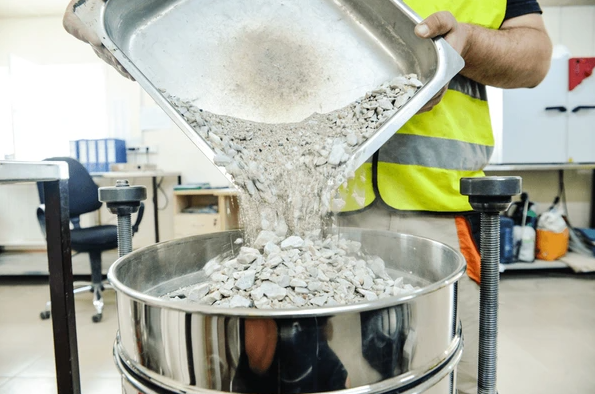
Sieve Analysis (ASTM C136) determines the particle size distribution of aggregates. Correct particle size distribution ensures proper packing, workability, and uniformity in concrete mixes. Aggregates that are too coarse or too fine can negatively impact flow, density, and strength. Sieve analysis provides a detailed breakdown of particle sizes, enabling engineers to adjust mix designs for optimal performance.
Materials Finer Than 75 µm (ASTM C117) measures the proportion of fine particles such as silt and clay. Excessive fines can reduce the bond between aggregate and cement paste, leading to weak spots in the concrete. Concrete Aggregates Testing identifies these fines, allowing corrective actions before mixing, ensuring a consistent and durable final product.
Durability & Strength Tests
Abrasion Loss or Los Angeles Abrasion (ASTM C131) evaluates aggregate hardness by simulating wear and crushing during handling and service. Aggregates that cannot withstand abrasion may degrade over time, reducing concrete strength and increasing maintenance costs. This test measures the resistance of aggregates to mechanical stress, ensuring long-lasting performance in high-traffic or load-bearing applications.
Soundness (ASTM C88) assesses the resistance of aggregates to weathering processes, including repeated cycles of freezing and thawing or wetting and drying. Concrete exposed to harsh environmental conditions requires aggregates that maintain integrity over time. Concrete Aggregates Testing identifies materials that are prone to deterioration, helping engineers select aggregates that provide reliable durability and protect structural longevity.
Physical Properties & Density
Specific Gravity & Absorption (ASTM C127) measures the weight-to-volume ratio of aggregates and their ability to absorb water. These properties are essential for accurate mix design calculations and determining the concrete’s workability. Aggregates with abnormal absorption rates can affect water-cement ratios, compromising strength and durability. Concrete Aggregates Testing provides these critical values to ensure every mixture achieves the intended performance.
Unit Weight & Voids (ASTM C29) evaluates aggregate density and the percentage of voids between particles. Accurate knowledge of unit weight and void content ensures proper batching and yield calculations. Concrete Aggregates Testing helps engineers determine the correct proportions of materials, reducing waste and improving cost efficiency without compromising quality.
Identifying Deleterious Substances
Clay Lumps and Friable Particles (ASTM C142) identifies weak or contaminant materials within aggregates. These substances can break down under pressure, resulting in surface defects, reduced concrete strength, and long-term performance issues. Concrete Aggregates Testing detects the presence of these materials and quantifies their impact, enabling corrective measures before they affect construction quality.
Field and Laboratory Testing Services
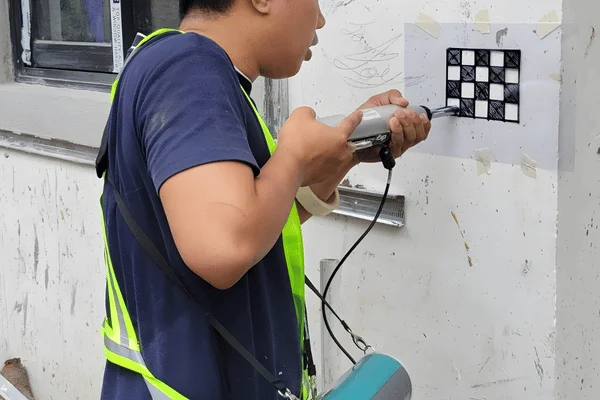
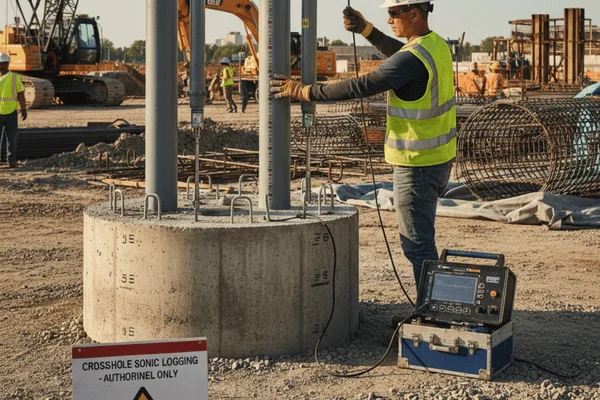
Concrete Aggregates Testing involves both field and laboratory evaluation to provide a complete understanding of material performance. Field Testing assesses soil, concrete, and pile foundations directly at the project site. On-site evaluation ensures accurate readings of material behavior under actual conditions, allowing engineers to make informed decisions about construction safety and stability.
Laboratory Testing delivers precise measurements of aggregates and construction materials using state-of-the-art equipment. Controlled testing environments allow for highly accurate results that comply with ASTM and AASHTO standards. Laboratory analysis complements field testing, providing comprehensive data to optimize material selection, mix design, and overall project outcomes.
Benefits of Partnering with Inch-On Materials Testing Laboratory
Selecting a trusted partner for Concrete Aggregates Testing ensures reliable, compliant, and actionable results. Inch-On Materials Testing Laboratory is fully accredited by the Department of Public Works and Highways – Bureau of Research and Standards (DPWH-BRS), providing credibility and regulatory compliance. Laboratory operations follow strict ASTM and AASHTO protocols, offering internationally recognized and highly precise data.
The team at Inch-On brings extensive expertise in structural integrity testing and foundation evaluation. Specialized equipment for soil, concrete, and pile testing ensures comprehensive assessment from base to structure. Partnering with Inch-On ensures every project benefits from accurate data, optimized material performance, and long-term reliability.
How Concrete Aggregates Testing Improves Project Outcomes
Concrete Aggregates Testing provides several practical advantages for construction projects. Accurate test results allow engineers to optimize mix designs, improving workability, strength, and durability. Testing reduces the risk of cracking, scaling, and structural failure, ensuring safety and compliance throughout the construction process.
Precise measurement of aggregate properties also supports accurate yield and cost estimation. By knowing the specific gravity, absorption, and void content of materials, construction teams can avoid over-ordering or under-ordering aggregates, resulting in cost savings without compromising quality. Concrete Aggregates Testing contributes to sustainable construction practices by minimizing material waste and improving resource efficiency.
Consistent and reliable testing enhances confidence in project outcomes. Engineers and contractors can plan construction sequences with assurance that the materials used will perform as required, even under demanding conditions. This reduces delays, mitigates risks, and supports high-quality construction standards.
Takeaway
Concrete Aggregates Testing is essential for reliable, durable, and safe construction projects. Accurate testing ensures materials perform as intended, supports proper mix designs, and provides confidence in the structural integrity of every project. Inch-On Materials Testing Laboratory delivers precise, actionable data that allows engineers, contractors, and project managers to achieve optimal results while maintaining compliance with industry standards.
FAQ: Concrete Aggregates Testing
What is Concrete Aggregates Testing?
Concrete Aggregates Testing involves evaluating the physical, mechanical, and chemical properties of aggregates to ensure they meet quality standards and project specifications.
Why is Concrete Aggregates Testing important?
Testing identifies weak or contaminated aggregates, ensures proper particle size distribution, and supports strong, durable concrete mixes. This reduces the risk of structural failure and surface defects.
What are the main tests performed during Concrete Aggregates Testing?
Core tests include Sieve Analysis (ASTM C136), Materials Finer Than 75 µm (ASTM C117), Los Angeles Abrasion (ASTM C131), Soundness (ASTM C88), Specific Gravity & Absorption (ASTM C127), Unit Weight & Voids (ASTM C29), and Clay Lumps/Friable Particles (ASTM C142).
Can field testing replace laboratory testing for aggregates?
Field testing provides in-situ assessment, but laboratory testing offers precise, controlled measurements. Both are complementary for comprehensive Concrete Aggregates Testing.
How often should aggregates be tested?
Testing frequency depends on project size, type of aggregate, and exposure conditions. Regular testing is recommended to maintain quality and compliance.
What benefits does Inch-On Materials Testing Laboratory provide?
Inch-On offers DPWH-BRS accredited testing, ASTM and AASHTO compliance, precise laboratory and field services, and expertise in structural integrity assessment.